

7 Brake Repair Mistakes Cottonwood Drivers Make (And How to Avoid Costly Comebacks)
Few things feel more overwhelming than the sudden realization that your car isn’t stopping quite like it used to. Whether it’s a high-pitched squeal while pulling into the Food Lion parking lot or a steering wheel that shakes every time you slow down on Highway 89A, brake issues can feel overwhelming fast.
You rely on your vehicle to keep your family safe, but between conflicting online advice and the fear of a massive repair bill, it’s hard to know who to trust. At 360 Automotive, we have these conversations every week. Drivers come to us frustrated because a “quick fix” they got elsewhere didn’t last, or a DIY attempt turned into a safety hazard.
Brake repair in Cottonwood, AZ, isn’t just about stopping; it’s about the heat of the Verde Valley and the steep grades of Mingus Mountain. If your brakes aren’t handled correctly, you aren’t just risking a noisy ride: you’re risking a breakdown.
Here are the seven most common brake repair mistakes we see Cottonwood drivers make and, more importantly, how you can avoid them.
1. The “Pad Slap”: Replacing Pads Without Addressing Rotors
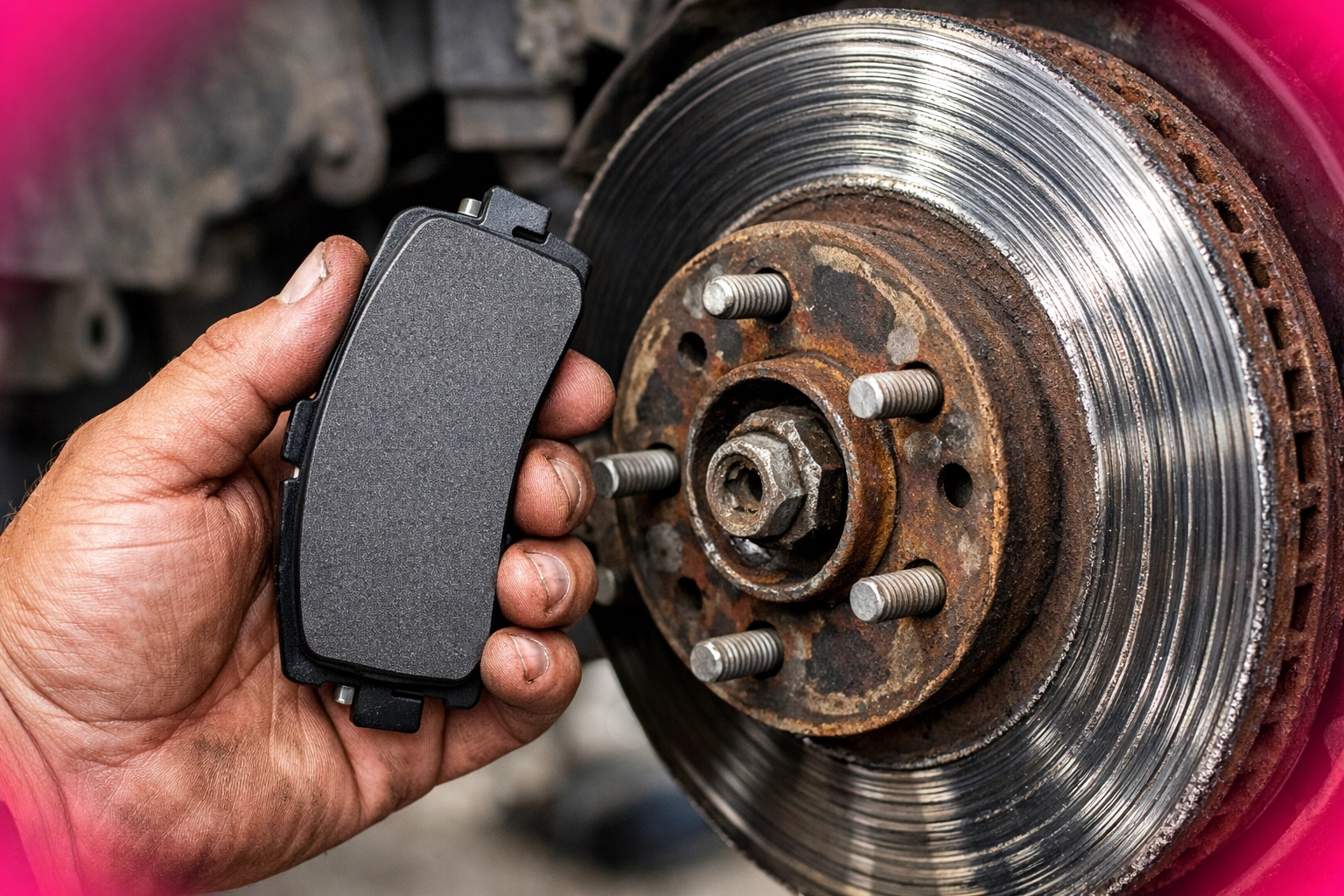
It is incredibly tempting to just throw a new set of pads on your car and call it a day. It’s cheaper and faster, right? This is often called a “pad slap,” and it is the most common mistake in the industry.
Your brake pads press against the rotors to create the friction needed to stop your car. Over time, rotors become thin, warped, or “scored” with deep grooves. If you put smooth, flat new pads onto a rotor that looks like a vinyl record, the pads won’t make full contact.
Why it matters to you:
Your new pads will wear out in a fraction of the time they should. You’ll experience reduced stopping power from day one and likely a pulsating brake pedal. At our shop, we always measure rotor thickness. If they can’t be safely machined back to a smooth surface, they need to be replaced. Doing it right the first time prevents a costly comeback three months later.
2. Ignoring the “Warning Song”
We’ve all been there: you hear a tiny chirp when you hit the brakes, so you turn up the radio. You tell yourself you’ll look at it next weekend. Then next weekend becomes next month.
Most brake pads are designed with a small metal tab called a “wear indicator.” When the pad gets dangerously thin, this tab scrapes against the rotor, creating that high-pitched squeal. It is literally your car’s way of asking for help.
The consequence of waiting:
Ignoring that squeak leads to “metal-on-metal” contact. Once the friction material is gone, the metal backing of the pad grinds into your rotor. What could have been a simple pad replacement suddenly becomes a much more expensive job involving rotors and potentially calipers.
3. Choosing the “Budget Special” Parts
In a world where everything is getting more expensive, it’s natural to look for a deal. However, when it comes to brake repairs, cheap parts are rarely a bargain.
Discount brake pads often use inferior friction materials that don’t handle heat well. In Cottonwood, where summer temperatures regularly soar above 100 degrees, cheap pads can “glaze” over. This creates a hard, slick surface that can’t grip the rotor, leading to dangerous brake fade.
The 360 Automotive difference:
We believe in quality workmanship and parts that last. That is why we use premium components and offer a 3-year/36,000-mile NAPA warranty. When you choose quality parts, you aren’t just buying brakes; you’re buying peace of mind for the next three years of driving through the Verde Valley.
4. Neglecting the Hardware (The Stuck Slide Pin)
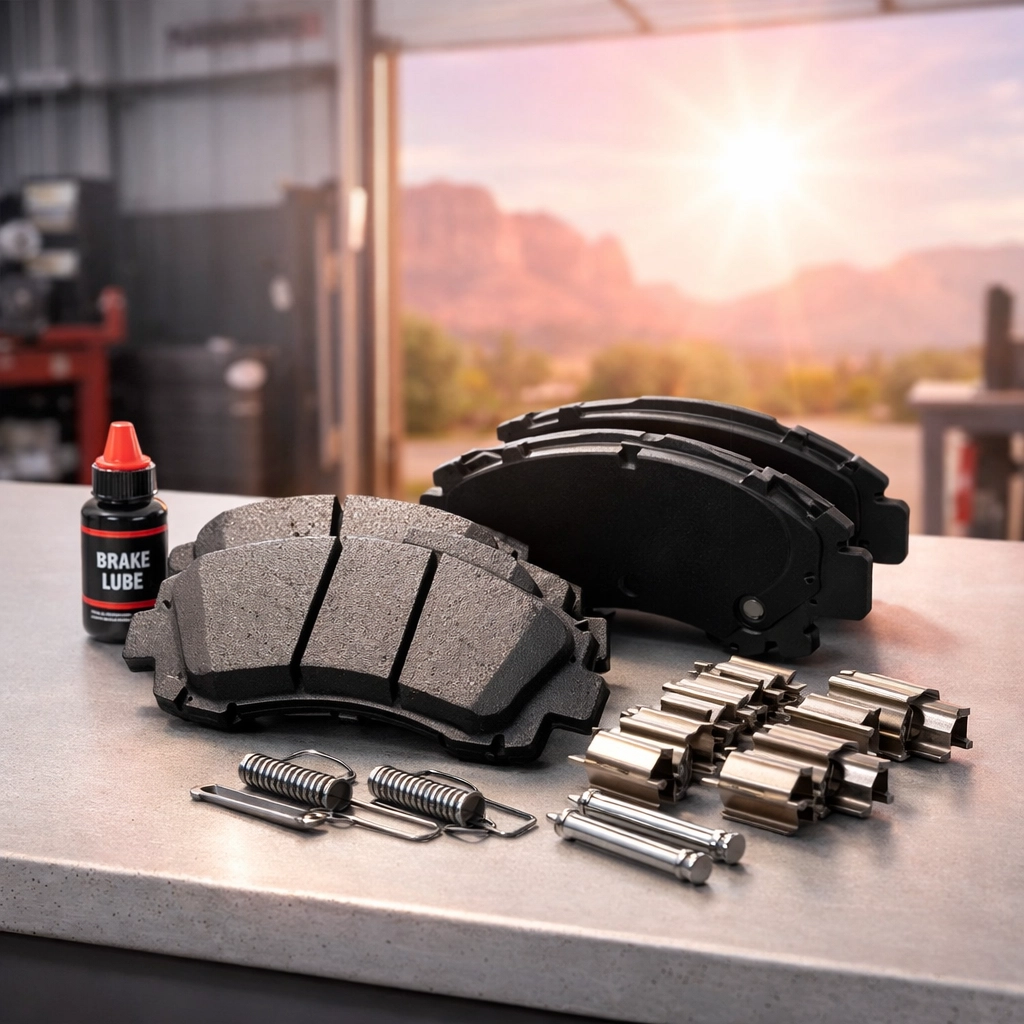
Many people think brake repair is just about the pads. But your brake system has moving parts that need to stay lubricated. The caliper slide pins allow the brake caliper to move back and forth so it can apply even pressure to both sides of the rotor.
Over time, the grease on these pins dries out or gets contaminated with Arizona dust and grime. If those pins seize up, one pad will stay pressed against the rotor while the other does nothing.
What to look for:
If you notice that one brake pad is almost completely worn down while the other looks brand new, you likely have a stuck slide pin. Every time we perform a brake service, our ASE-certified technicians remove, clean, and re-grease these pins with high-temperature silicone grease. It’s a small step that prevents big problems.
5. Improper Caliper Handling During Repair
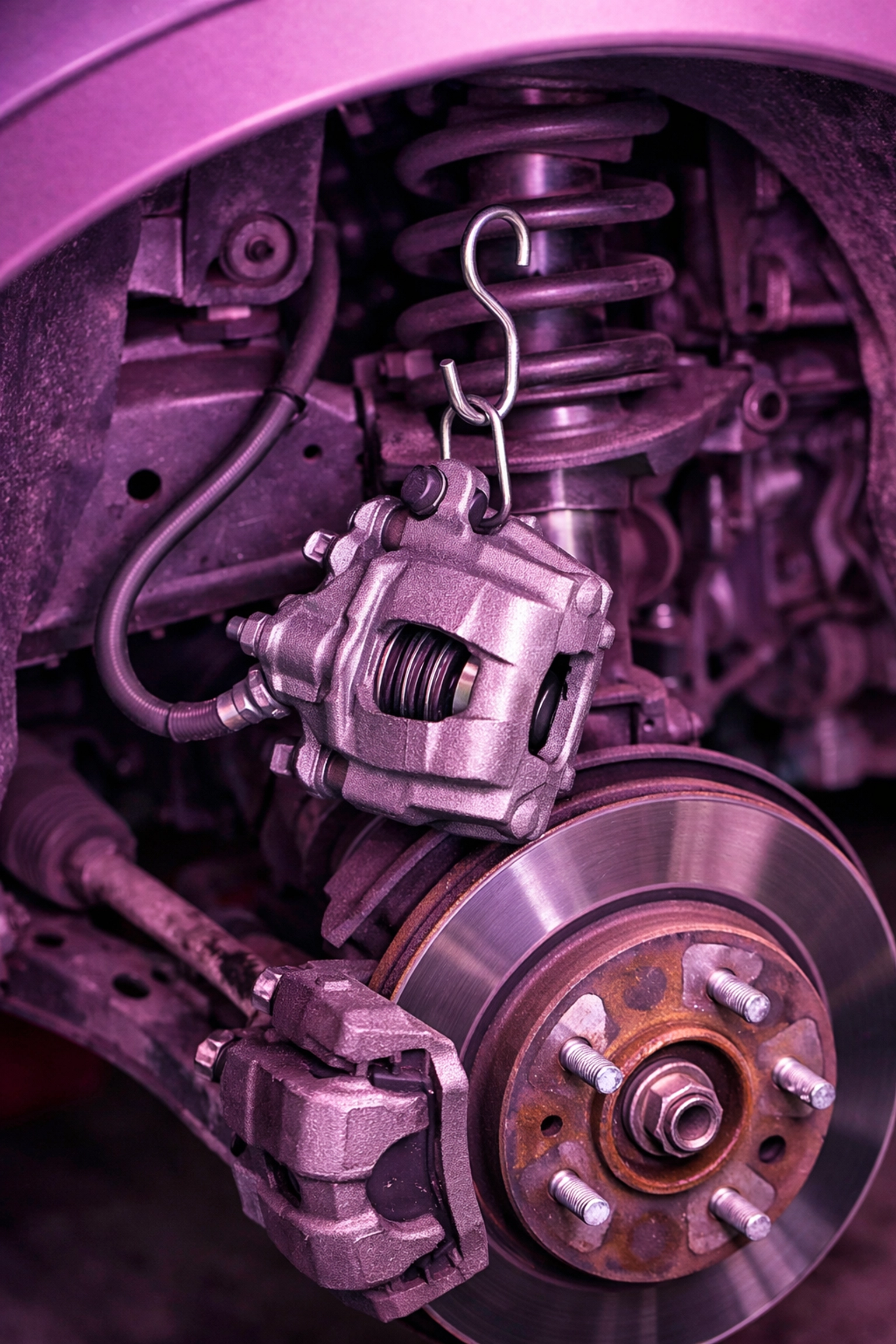
If you are a DIYer or taking your car to a cut-rate shop, watch how they handle the calipers. A common mistake is letting the heavy metal caliper hang by the rubber brake hose while changing the pads.
Brake hoses are tough, but they aren’t designed to support the weight of a caliper. This can cause internal damage to the hose that you can’t see from the outside. Eventually, that hose can swell shut or leak, leading to a “pull” when you brake or a total loss of pressure.
Safety first:
Professional technicians always use a “S-hook” or a bungee cord to hang the caliper securely from the suspension. It’s a hallmark of a shop that cares about the details.
6. Contaminating the New Pads
Your brake system needs to be surgically clean. Even a small amount of grease or oil from a mechanic’s fingers can ruin a brand-new set of brake pads. If oil gets on the friction material, it soaks in and creates a slick spot that will never grip correctly.
Another form of contamination is failing to clean the “packing oil” off new rotors. New rotors are shipped with a thin layer of oil to prevent rust while they sit in a box. If a technician doesn’t spray that off with brake cleaner before installation, that oil smokes and ruins the new pads immediately.
7. Falling for the “Phantom Repair” Scam
It’s an unfortunate reality: some shops take advantage of the fact that most drivers don’t see their own brakes. They might charge you for a full brake job but only replace the pads, or worse, claim they replaced parts that were still perfectly fine.
This is why choosing a locally trusted, female-owned shop matters. You deserve honest advice and fair pricing.
How to protect yourself:
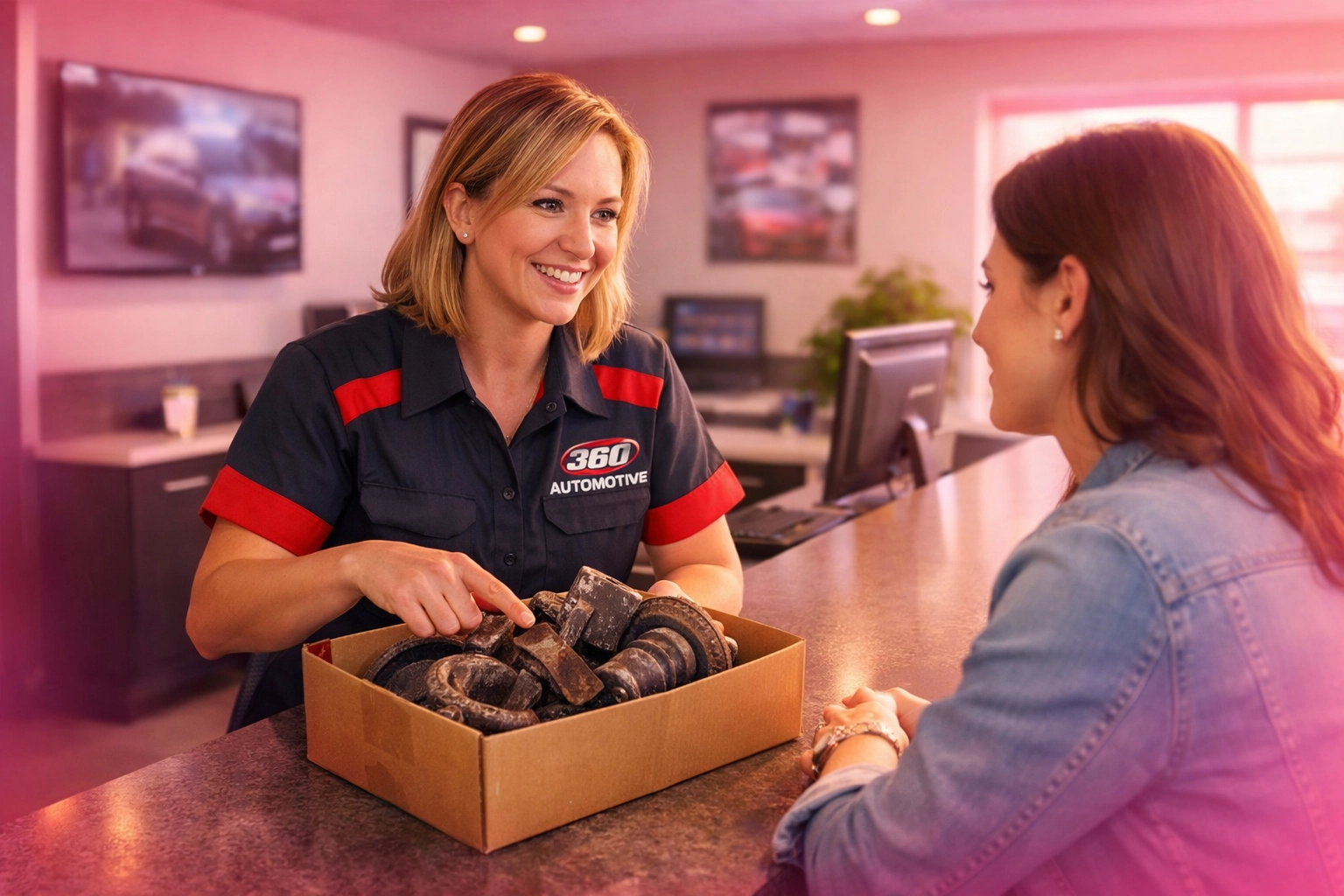
Ask to see your old parts. A reputable shop will have no problem showing you the thin pads or the scarred rotors they removed from your vehicle. We believe in transparency because we want to be your mechanics for the long haul, not just for one transaction.
Why Cottonwood Drivers Trust 360 Automotive
Brake repair Cottonwood AZ isn’t something to take lightly. Between the heat and the hills, your brakes work harder here than in many other parts of the country. At 360 Automotive, we treat your vehicle as if our own families were riding in it.
- Expertise: Our ASE-certified technicians understand the complexities of modern braking systems, including ABS and electronic parking brakes.
- Warranty: We stand behind our work with a 3-year/36,000-mile NAPA warranty, giving you national protection and local confidence.
- Integrity: As a female-owned business, we pride ourselves on a “no-pressure” environment. We explain what your car needs, why it needs it, and what can wait.
- Convenience: We serve the entire area, including Cornville and Clarkdale, providing everything from general maintenance to complex repairs.
Don’t Wait for a Breakdown
If your brakes are making noise, feeling soft, or just don’t feel “right,” don’t wait. A small adjustment today can prevent a major repair tomorrow. We have these conversations every day, and we are here to help you navigate the process without the stress.
The key is understanding that your brakes are your vehicle’s most important safety feature. Protect your second-largest investment and your family by choosing quality care.
Contact us today to schedule a brake inspection. Let’s make sure your car is ready for whatever the Arizona roads throw at it.