7 Mistakes You’re Making with Check Engine Light Diagnostics in Cottonwood, AZ
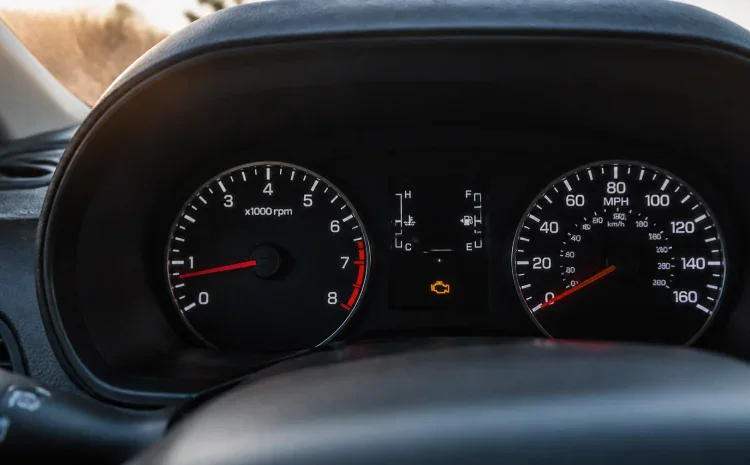
We’ve all been there. You’re driving down 89A, maybe heading toward Sedona or just running errands around Cottonwood, when that little yellow “Check Engine” glow pops up on your dash. Your heart sinks a little. Is it a loose gas cap? Or is your engine about to give up the ghost?
It’s tempting to pull into the nearest auto parts store and ask for a “free scan.” It sounds like a shortcut to the answer, right? Unfortunately, that “free scan” often leads to more confusion, wasted money, and a light that keeps coming back.
At 360 Automotive, we see folks every week who have spent hundreds of dollars on parts they didn’t need because they fell into common diagnostic traps. If you’re looking for check engine light diagnostics in Cottonwood, AZ, avoiding these seven mistakes will save you time, money, and a whole lot of frustration.
1. Confusing a “Code” with a “Diagnosis”
This is the number one mistake drivers make. When you get a free scan at a parts store, the tool reads a “trouble code”: something like P0420 or P0300. The employee might tell you, “It says you have an O2 sensor code.”
Here’s the truth: a code is not a diagnosis. A code is just the computer pointing at a symptom. It’s like telling a doctor, “My arm hurts.” The doctor doesn’t immediately perform surgery; they check if the bone is broken, if it’s a muscle strain, or if it’s a nerve issue.
An O2 sensor code doesn’t always mean the sensor is bad. It could be a vacuum leak, a broken wire, or even a bad fuel injector. Replacing the sensor without a real diagnosis is just a guess, and an expensive one at that.
2. Relying on the “Parts Store Cannon”
Have you ever heard of the “parts cannon”? It’s what happens when someone keeps buying and installing new parts, hoping one of them finally fixes the problem. Most free scans come with a printout of “possible fixes.” These lists are generated by software that looks at what other people usually buy when they have that code.
The problem? Your car isn’t “usual.” It’s unique. Following those suggestions blindly is like taking medicine for the flu just because your neighbor had one, even though you actually have a cold. Professional check engine light diagnostics involve testing the specific components on your vehicle to see what’s actually failing before a single part is ordered.
3. Clearing the Code and Hoping It Stays Away
It’s a common DIY tactic: disconnect the battery or use a cheap scanner to “clear the code” and see if it comes back. Sometimes, it stays off for a day or two, and you feel like a genius.
But here’s why this is a mistake: when you clear that light, you’re also deleting “freeze frame data.” This is a snapshot of exactly what your engine was doing the moment the light came on: the temperature, the RPMs, the speed, and the fuel mixture. This data is gold for a technician. Without it, finding an intermittent problem becomes much harder and can take much longer.
4. Ignoring a Light That “Doesn’t Feel Different”
“The light is on, but the car drives fine, so it can’t be that bad.” We hear this a lot in the Verde Valley. But modern cars are incredibly smart. They can often compensate for a failing sensor by adjusting other settings.
However, running in this “limp mode” or “fail-safe” state usually means you’re burning more fuel and putting extra stress on other expensive components. What might have been a $150 sensor repair today could turn into a $1,500 catalytic converter replacement in three months because you ignored the warning.
5. Assuming All Scan Tools Are the Same
The $20 scanner you bought online or the one used at a parts store is basically a “reader.” It can talk to the computer, but it can’t listen very well.
Professional-grade diagnostic equipment used at shops like ours costs thousands of dollars for a reason. These tools allow us to see “live data” in real-time. We can watch how a sensor reacts as we drive or manipulate the engine. We can also perform “active tests”: forcing the computer to turn a fan or a pump on to see if it’s working. A basic scan tool simply can’t do that.
6. Forgetting About Technical Service Bulletins (TSBs)
Sometimes, a check engine light isn’t caused by a broken part at all. It might be caused by a software glitch that the manufacturer has already found. In these cases, the “fix” is actually a software update, similar to updating your phone.
When you bring your vehicle to 360 Automotive for general auto repairs, we check for these TSBs. A parts store or a DIY scan won’t tell you that your car needs a software flash instead of a new part. You could replace every sensor under the hood and the light would still stay on because the computer just needs an update.
7. Choosing a Shop Based Only on the Diagnostic Fee
We get it: paying for a diagnostic fee when you just want the car fixed feels annoying. You might be tempted to call around Cottonwood and Cornville to find the absolute cheapest diagnostic price.
But remember: you’re not paying for someone to “plug in a machine.” You’re paying for the expertise of an ASE-certified technician who knows how to interpret that data. A “cheap” diagnosis that results in the wrong part being replaced isn’t a deal: it’s a waste.
Trust the Experts in Cottonwood
A check engine light is your car’s way of asking for help. Don’t let a “free” scan turn into a costly mistake. At 360 Automotive, we pride ourselves on being a female-owned, local shop that values honesty over a quick sale.
Our technicians are experts in both domestic and Asian vehicles, and we provide a clear, easy-to-understand explanation of what’s actually happening under your hood. Plus, as a NAPA Auto Care Center, we back our work with a 3-year/36,000-mile nationwide warranty.
Ready to stop guessing and start fixing? Contact us today or swing by our shop in Cottonwood. We’ll help you get that light off and get you back on the road with confidence.